

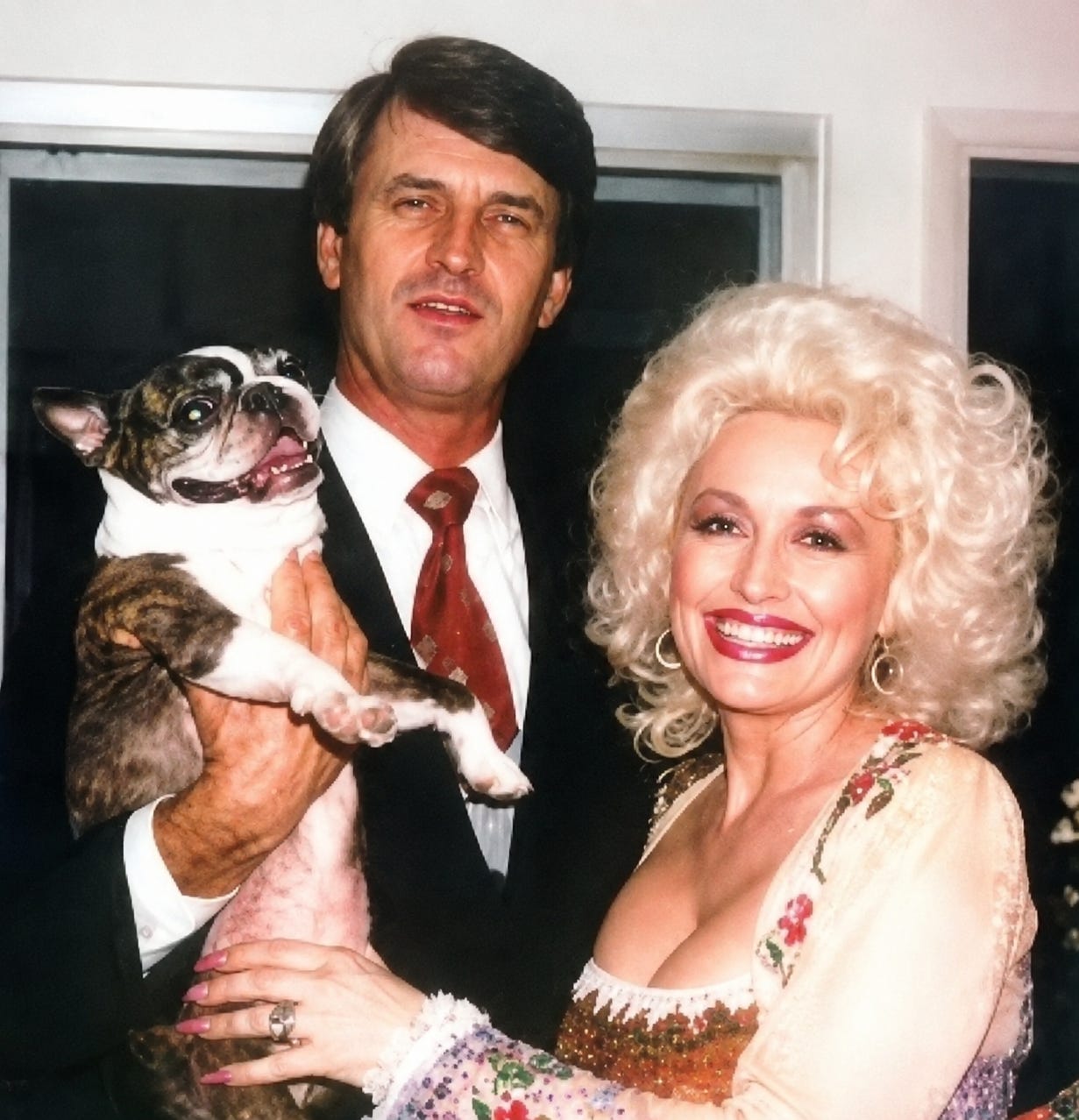
When I heard the news about Dolly Parton, I, like most of us, thought, “Fuck, no. Not now. We need her.”
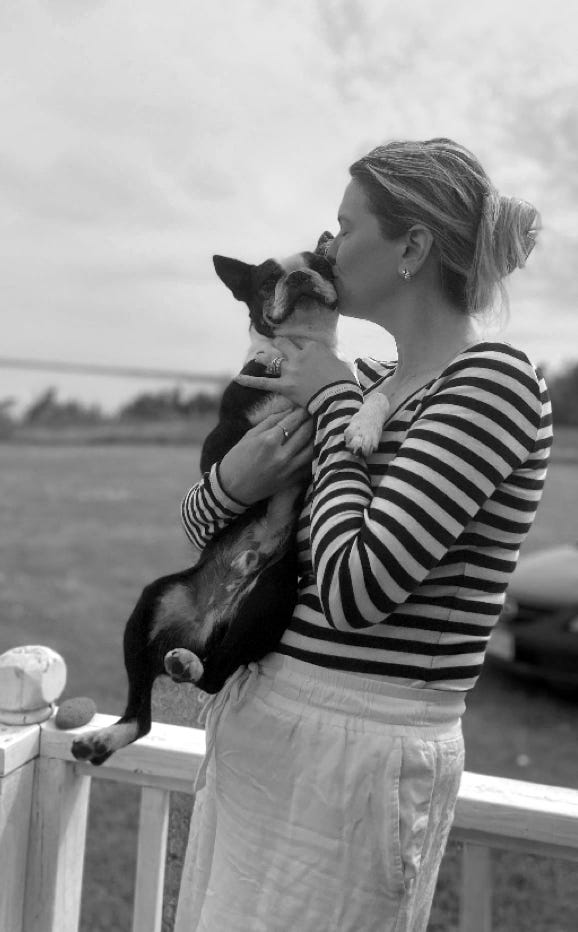
At the risk of sounding like a grief-monger who’s unlocking a new bereavement niche in real time, loss has been on my mind. Since the sudden passing of my literal spirit animal, Dewey, a week ago, death and all its accoutrements have been up to my décolletage.
In high school, my Mom’s best friend was my guidance counsellor. My file was conveniently reassigned to her in the 11th grade. This meant I no longer had to forge doctor’s notes and pretend to have hypoglycemia to get the “good lunch” period. Knowing my guidance counsellor well enough to hot tub at her house also meant that I got to see behind the polyester curtain.
I was privy to the gossipy, bleeped versions of who got caught fucking who in a stairwell, and the real reason our French teacher was on “medical leave” (shoplifting).
But as in every high school, legitimate tragedies happened too. One kid would get thrown from a truck after a bush party and die. Someone else would jump off the town’s barely-tall-enough bridge. Many more would cut themselves curtain bangs.
Minus the curtain bangs, when these tragedies happened, crisis therapists were brought in. I assumed that the sombre announcements of “support made available” meant little more than a public school PR stunt and a trifold pamphlet.
But according to my guidance-counsellor intel, the students who sought extra support were rarely the ones directly affected. It was often the same select students, returning for every school-wide tragedy.
I share this meanderment because I am not one of these students. I am not a grief second-hander. I don’t like death, solemn faces, crying eyes, funeral sandwiches, or the general theatrics of people I have fun with being recast as “deeply sorry”. I will take the gorgeous bereavement flowers, but please, leave the pity at the door.
This is why my reaction to Dolly surprised me. Losing her could have me reaching for more than a pamphlet.
She was fucking special.
In the most divisive stretch I’ve been around to peg-leg this earth, she was a uniter. Everyone loved her. And more than that: everyone felt like they knew her. Like she was somehow part of them.
It felt like, despite never meeting her, you could share a slice of lemon meringue pie or a glass of bourbon with Dolly and she’d really see you. At some point, she’d unclip the brooch you’d been eyeing from her slim-fitting blouse, insist you keep it, and you’d spend the rest of the afternoon laughing.
As a Canadian thirty-something who grew up on a dairy farm in Ontario, Dolly and I had no obvious reason to cross paths. Yet, I dressed up as her for my 29th birthday, listened to the deep cuts and even the Hallmark-esque movie misses, and have always shortlisted “Dolly” for both human and dog-naming purposes.
So, coming off the tail of losing Dewey, my tippy top love, and another blonde-wigged constant, I was looking for answers. How could two greats go down so close to one another with so little warning?
In grief, we search for silver linings. We want anything to file down the sharpness.
Over the last week, Dewey’s silver linings have been: the first nine years are the best ones, anyways; we were at home with him and jammed in an estimated 18 years of quality time compared to office 9-to-5ers; and at least we didn’t have to smell his breath getting worse (although truthfully, I’d love nothing more).
But then, on the day of Dolly’s departure, an unexpected connective tissue between Dewey and Dolly formed.
What if, both fresh off planet Earth, they met in some rhinestone, white-leatherette waiting room in the “in between”?
They have a lot in common. They both emanate pure joy, never cast judgement, love music and country living, and look great in blond wigs (I have the pics to prove it).
Amidst the “fuck no, not Dolly” texts, I floated this new theory to my Mom, husband, sister, cousin, and three close girlfriends. Everyone agreed.
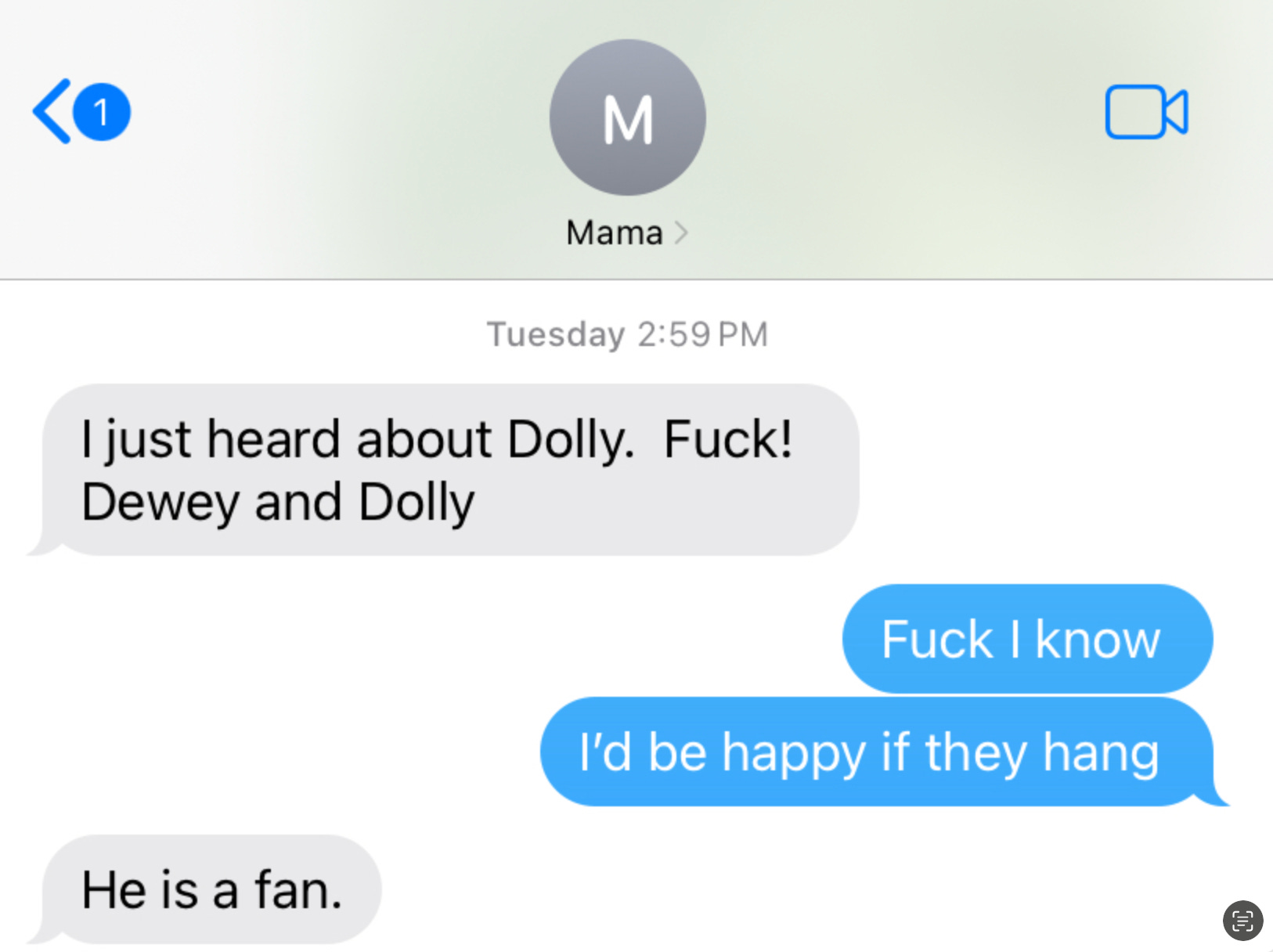


My husband, Kevin, said, “Dolly’s the only person I’d trust Dewey with.”
I reminded him that in the last three months, his Oma, Grandma, and coolest punk-rock Aunt had also died. This did not change our preferred custodianship.
“Dewey and Dolly would just have so much fun together,” I added.
Kevin agreed.
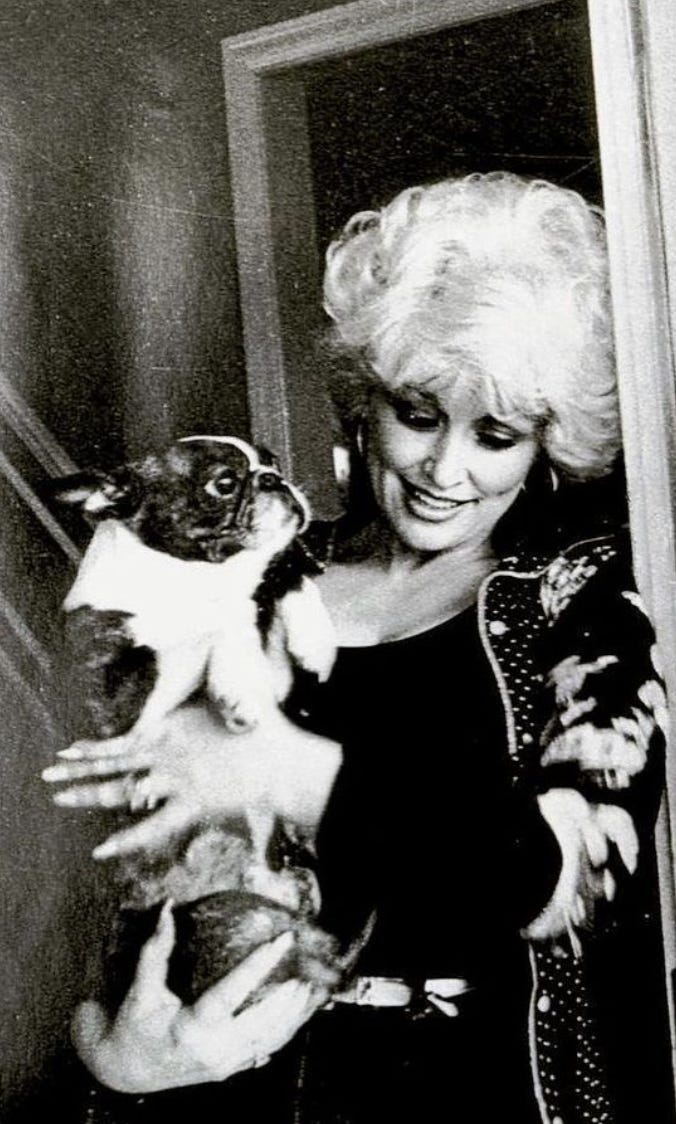
Then, driving home from dinner, my Mom sent me a photo of a younger Dolly holding a Boston Terrier.
Immediately, I let out a half-gasp. Suddenly, this grief-driven delusion felt intuitive, and to woo-woo folks, possibly even rational.
When I got home, I started digging and found dozens of posts about Dolly being reunited with Popeye.
Of course Patron Saint Dolly had a Boston Terrier!
And as it turns out, Popeye wasn’t a peripheral character in Dolly’s big life.
In fact, she credited Popeye with saving her in the early 1980s. During what Dolly described as a suicidal episode following an “affair of the heart,” she pulled a gun from her nightstand.
Dolly recalled looking at the gun for a long time before picking it up. Then Popeye came running upstairs. “The tap-tap of his paws jolted me back to reality,” Dolly said, and she put the gun down.
Dolly later described Popeye as “a spiritual messenger from God” who intervened when she needed it most.
The rest can’t be corroborated and could be Boston Terrier-enthusiast propaganda, but apparently Dolly and her husband, Carl, treated Popeye like their child. When he got sick, the story goes that they took him to Auburn University for experimental treatment. When he died, Carl apparently built him a tiny coffin and buried him beneath their bedroom window. According to the same telling, he was so grief-stricken that it took years before he could look at Popeye’s toys or photos again.
Whether or not grief turns us into storytellers, I don’t know.
Since Dewey died, I’ve asked aloud, “Where does all the love go?”
When the thing you poured it into is suddenly gone, what happens to everything you still have left to give? Does it get redistributed? Does it attach itself to something new?
For Dolly, we won’t have to travel far to find her. She’ll play on the radio and appear in a gaudy sea of textile sparkle for generations. But for those who die more quietly, without a public library of greatest hits, it’s on us.
Maybe the stories we tell about them, the coincidences we attach meaning to, and the silver linings we decide to believe in are really just places to put the love.
So Dolly, until we arrive at your rhinestone waiting room, please take care of our precious boy. Go ahead and introduce him to Popeye. He doesn’t like other dogs at first, but it’s not aggression; it’s shyness. He’s always felt a kinship with his own kind, so he’ll love you both.
And if he brings you his ball, throw it. Just don’t expect him to catch it.
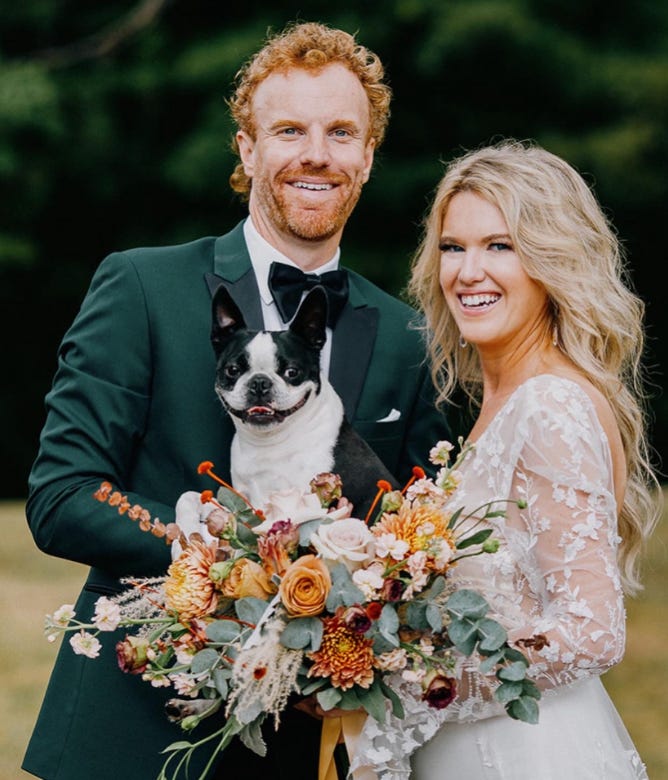
Grace, I like getting to know you beneath the witty one-liners. You, your husband, and Dewey make for a beautiful family.
For some reason, the loss of Dolly hits many of us hard. I love the thought of her babysitting other loved ones for us! Plus she’ll be leading a lot of sing-alongs up there.